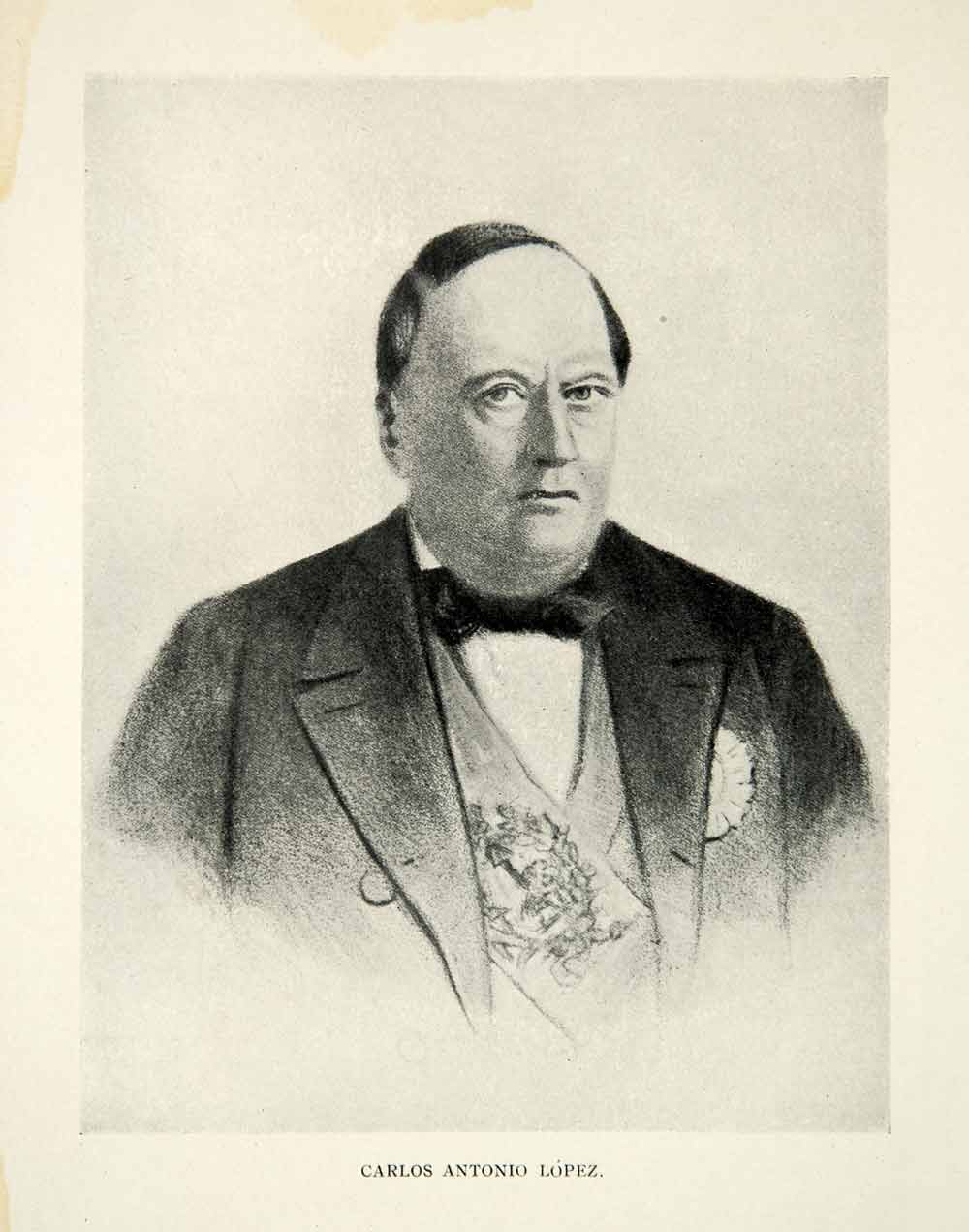
Carlos Antonio López
Carlos Antonio López Ynsfrán
President who ended Paraguay's isolation and modernised the nation with education, infrastructure, and progressive social reforms.
Biography
Carlos Antonio López Ynsfrán was born on 4 November 1792 in Asunción, Paraguay, to parents of mixed Indian and Spanish descent. Despite his family's modest circumstances, López received an excellent education in Asunción and became a lawyer. Following the death of Paraguay's first dictator, José Gaspar Rodríguez de Francia, in 1840, López emerged as a key figure in the transitional government. In 1841, he ascended to power, initially serving as one of two consuls before becoming Paraguay's first Constitutional President in 1844. His presidency, which lasted until his death in 1862, marked a dramatic reversal of Francia's isolationist policies and ushered in an era of modernisation and international engagement that would transform Paraguay from a closed, inward-looking state into a progressive nation that impressed foreign observers. López made the improvement of Paraguay's educational system a top priority, recognising that a nation devastated by colonial exploitation and then isolated under Francia needed an educated citizenry to prosper. He founded new schools throughout the country, established libraries, and hired foreign teachers and technical experts to train Paraguayans in modern methods. His government expanded rural primary schools and worked to make education accessible beyond the capital. He also promoted the development of commerce and foreign ties, opening Paraguay to trade and diplomatic relations after decades of isolation. Under his leadership, Paraguay developed infrastructure including improved roads and river navigation, and he invited European technicians to help modernise agriculture and industry. López's administration undertook significant social reforms that demonstrated a progressive vision for Paraguay. He abolished the African slave trade and recognised Indigenous villagers as full Paraguayan citizens, extending rights and protections to populations that had been marginalised. His government developed Paraguay's nascent industrial capacity, including the establishment of iron works at Ybycuí, which became a symbol of Paraguay's industrial ambitions. He strengthened Paraguay's military and diplomatic position, asserting the nation's sovereignty and territorial claims in disputes with both Argentina and Brazil. His careful diplomacy and military preparations were intended to protect Paraguay's independence, though these same preparations would later be inherited by his son and successor, Francisco Solano López. When Carlos Antonio López died on 10 September 1862, he left behind a Paraguay that had been fundamentally transformed. Revisionist historians credit his administration with successfully modernising Paraguay, developing its economy, expanding its international commerce, and creating the educational and institutional foundations for a modern state. The period of his rule is often remembered as a golden age when Paraguay achieved remarkable progress and prosperity, standing as one of the most advanced nations in South America. His legacy is honoured on the 5,000 Guaraníes banknote, and the "Don Carlos Antonio López" National Postgraduate Scholarship Abroad Program (BECAL) continues his commitment to education by supporting Paraguayan students pursuing advanced degrees internationally. His vision of a modern, educated, and sovereign Paraguay remains central to the nation's identity, even as the catastrophic war that followed his death would test that vision to its very limits.
Historical Significance
López transformed Paraguay from an isolated state into a progressive nation. His emphasis on education, infrastructure, and social reforms created the foundations for a modern state.
Featured on Banknotes
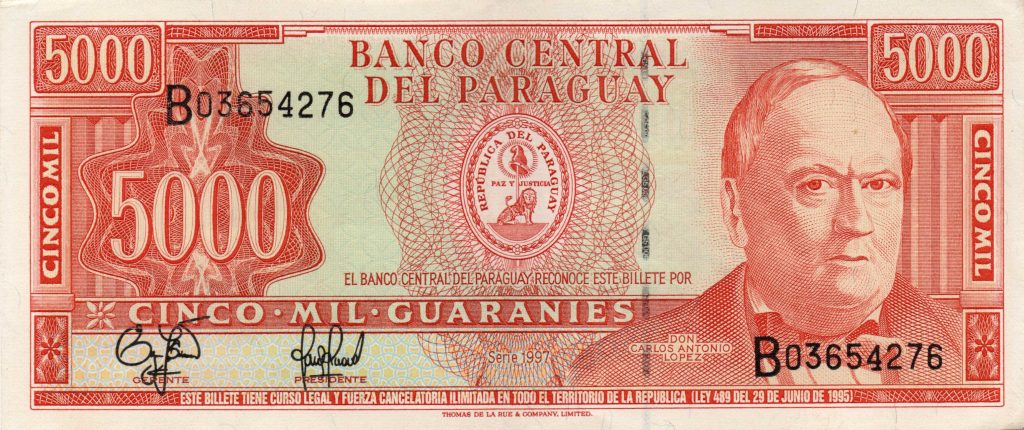
Honours Carlos Antonio López, president who modernised Paraguay and ended isolation.